Showing posts with label Industrial Design. Show all posts

Aug 5, 2020

Nodle M1


Co-founded, led ID and Production 

Oct 3, 2017

VTOL Cities


As new RideSharing models quickly prove feasibility, investors and dozens startups are racing for what lies beyond self driving cars, VTOL. If legislation can keep pace with technology, our skies, and cities will quickly transform into something new.

We can begin to imagine new cities arising in the middle of nowhere, strategically positioned between points of interest. The drive for humans to escape cities, and the affordability of VTOL just might replace the Jet age.


This is an excerpt from my Medium Post: Flying Cars are Here to Stay

May 22, 2017

Ola Play

Helped imagine, design, source, and launched Ola Play, the largest connected Ridesharing network on Earth. Each cab became part of a distributed computing network. Banglaore, India:


Jan 15, 2016

Augmented Reality Interface for Military, Search and Rescue, and Space Applications

Soldiers, police, firefighters, astronauts, search and rescue workers all face the problem of managing information. This is an attempt to organize radios, comm links, encryption, health and power in an arm-mounted interface. The following is a design sketch for maps:
The first iteration would be a flexible e-ink display to be strapped to the wrist. Large touch points make it easy to use in the field with gloves or wet hands. As Augmented reality quickly develops, the interface moves from the wrist to virtual reality within AR sunglasses:

The interface is designed to adapt as technology quickly advances....


Nov 5, 2015

The Verge reviews the stone

My favorite project yet:
I worked with a talented EE, leading the design and manufacture of 800 prototype units. 
Reviewed by The Verge:

Oct 25, 2015

Extended battery module for Project ARA

ARA will be perfect for Industrial control applications. This battery pack allows it to operate in remote environments for extended periods.
Early Ara prototypes were falling apart, the concept above uses pushpins to lock modules din place. 

Alternative Reactor Designs

The physics and mechanics to power a fossil fuel free, nuclear powered future are quite well known. Todays coal power plans could operate using nuclear power plant designs from the 1960s and still be light years ahead of our current energy infrastructure.
Modern nuclear reactors are virtually indestructible, highly efficient, and very cheap to operate. So why haven't more reactors been built? The answer is fear. And politics. A new power reactor hasn't been built for the public in the US since the 1970s (while countries like China, France, and India are going full steam ahead with their light water reactors.
In comparison the reactor that blew up a Fukushima was from the 1970s and very similar to the designs used in the US today. Most experts think we should update our rusting fleet, and I agree. We know how to do it, and it would cost very little to do so. It is the political situation regarding nuclear power that is keeping us in the coal age. What we need to do is sway the opinion of politicians and the general public.  It is a marketing problem, and the future of humanity just might depend on it. 
This is a quick sketch I created to explore how nuclear reactors might be able to appear more friendly. Reactor technology has advanced so far, that the US military us using dozens of small reactors to power floating cities (Aircraft carriers) with people living and sleeping safely just a few hundred feet away from the reactor core. There is no reason (besides the current political situation) that a nuclear reactor cannot power schools, factories, and agriculture. Experimental designs are even safer, requiring less maintenance.
The Ginna Nuclear Power Plant, that powered the first 16 years of my life (Democrat and Chronicle)
Currently operating plants were generally built in the 1970s and 80s, huge monolithic designs with truly scary architecture. The "Communist green" building above holds a gigantic pressurized water reactor that powered my home growing up. Even old designs can be operated safely, but experts are raising questions as most reactors in the US are having their lifetimes extended 20 years beyond ther spec. If we're going to build new power plants, they must look attractive and safe, and seem different than the "Old unsafe designs of yore" .If we're going to be building one in our backyards, they're going to need a new look, new style, and a new brand.

Aug 27, 2015

An experiment in Bitcoin

The problem with modern cryptocurrency is that it is quite intangible to the average person. In order to see widespread adoption, Bitcoin must be made simple to understand. Normally, the currency is transferred by a string of text [or a private key]. Most people can't understand that a string of text can hold value, people need something physical to associate that value with.

I along with two colleagues designed a physical version of Bitcoin. Many attempts have been made, but this was the simplest (and most attractive) we could conceive. A database has been designed  to handle the wallet generation, alongside the creation of QR codes and unique identifiers.  Each "coin" is unique and any value can be associate with each "Coin". My role was to create the designs, and layout the several hundred unique "coins" for print.

A fun experiment in product design! I hope to see these end up all over the world!

Jun 13, 2015

More on the future of the internet

 Most modern smartphones can form highly advanced mesh networks, but they are limited by three things:
1.Power
2.Range
3.Software fragmentation (in Mesh protocols and RF communication stack)

I look around and almost every human has a powerful networking computer in their pocket. With currently existing hardware (Wi-fi and Bluetooth, possibly LTE) massive networks will be created, augmenting and building upon our current information infrastructure. Currently hardware incompatibilities make this difficult to do.  Ara will help change this.

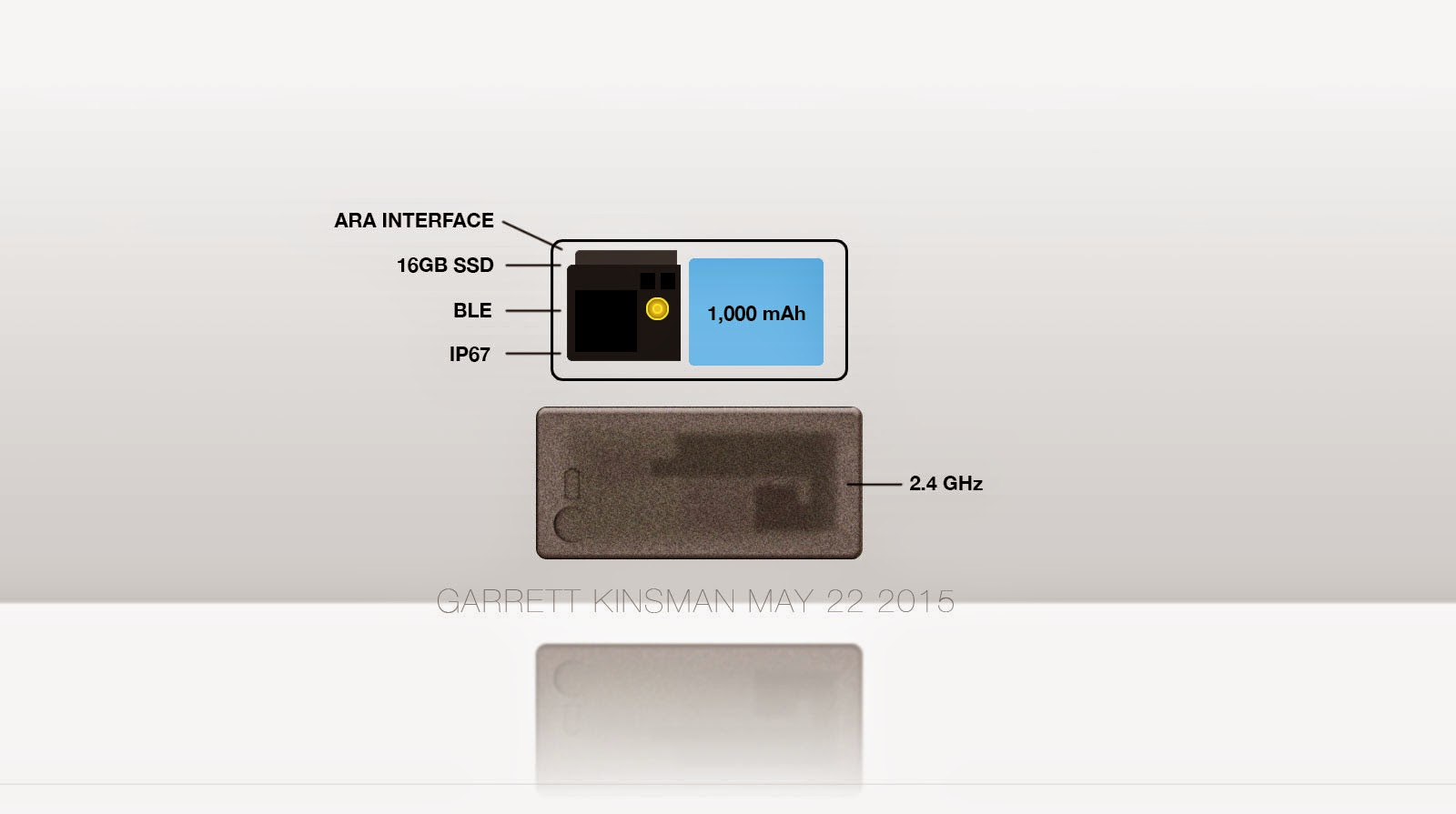
To further explore my original concept, I imagined a higher power radio on Ara. With USB C, power will be more modular, allowing the radio to feed off a cheap battery pack or a laptop. More power allows for a longer range and more data to be transferred. This would act as a node that anyone can access, connecting the user to a free network. 

 I opted for an external antenna for it's better RF propagation and range. When connected to the mesh, much more data will be passing through the device. Many argue it's unsafe to position a transmitter directly against one's skin (For example in your pocket).  This design is for 2.4 GHz (Wi-Fi/ bluetooth), as it can communicate with modern non-Ara devices. When I add a storage module, Ara becomes a digital library for places where internet isn't available or is too expensive. 

Today we are seeing simple networks form between people. Soon, we will utilize LTE Direct to create much more advanced networks. Free, local networks will form sharing information, texts, and calls. Developers will create radical applications, enabling the next era in mobile computing. Connect this to dark fiber, or a balloon, and you have just connected the next 3 billion.

All we need is some software.....

May 26, 2015

Ultra-modular Thorium Molten Salt Shipping Container Reactors

The following is a concept based on current and past pursuits in small reactor technology. Today, there are two major issues we need to solve. 1- We need to build a global, free, open internet for all mankind to use. I am working on this problem today, and it is easily feasible (Mostly through software). The next leap will require slightly more resources: 2- Energy. Global fossil fuels consumption is accelerating rapidly, with higher energy demands each year. Here's how we get our power (Courtesy of the EPA):
Over 80% of our energy comes from burning the ancient forests of our Earth. This simply isn't sustainable. Much like our demand for internet, our demand for energy is insatiable. In order for us to keep up with increasing demand we need new sources. Fusion is still at least 20 years away, we need a solution for now. But in order for nuclear to work, it must be at the right price and in the right form factor. To look at the future we must look towards the past:

As our nation came out of WWII, atomic energy was applied to a wide variety of tasks. WWII was won partially because of our oil infrastructure, and the Army wanted the best energy sources for any future conflict. In 1954 the Army officially began it's nuclear power program. Over the course of its operation, reactors were built in Antarctica, and along the Dew Line. One reactor even powered an underground ice base at Camp Century, Greenland. 
One variation was the highly experimental reactor shown above. It consisted of six shipping container-sized modules, to save weight, radiation shielding was removed. The main control module required placement 500 feet away from the reactor unit. The Nitrogen-cooled gas-turbine design was fraught with technical problems and corrosion issues.  Deemed a failure, it was an important experiment in portable reactors. 
The Air Force experimented with nuclear powered aircraft (ARE) in the 1950's, creating the foundations of molten salt reactor design. Oak Ridge National Laboratory furthered such experiments  with a highly successful test ending in 1969. Research began to fizzle out as funding dried up in the 1970s and 80s.
The Navy now leads the Nuclear era with their small, modular, pressurized water reactors (SMRs). Such reactor designs have been powering submarines for over 60 years. They now operate a fleet of over 80 subs and carriers (as of 2014) powered by SMRs, many of these vehicles carry more than one reactor.  This IRIS reactor operates on similar principles and is designed mainly by Westinghouse, the maker of many Navy reactors:
Some very interesting research is going into the creation of combustion fuel from seawater using such reactors. Though the Navy has much more advanced reactors, this SMR technology is beginning to hit consumer markets. 
The problem with small uranium reactors is their cost, mainly because of their unsafe inherent safety profile and setup costs. Simon Irish gave an insightful talk on how increased safety directly reduces the cost of building and running nuclear reactors. While SMRs are an order of magnitude safer than the outdated goliaths used in Chernobyl and Fukushima, uranium still poses hefty proliferation and regulatory concerns. 
The only way to build and operate SMRs affordably are to make them:
  1. Inherently Safe
  2. Modular
  3. Autonomous
  4. Portable
  5. Low Proliferation Risk
  6. Efficient
  7. Mass Produced 
The only way to drive down the cost of nuclear power is to mass produce small units. Using the much safer, liquid fuel cycle will also drastically improve safety and efficiency. ML-1 got a lot of things right. It was very cheap to set up (compared to today's custom, >$1bn power stations). Technological and theoretical advancements would now allow a portable, ML-1-like unit to be quite viable. I suspect many such units likely exist in our current "Arsenal of Democracy". The government builds cool stuff, much of which we will never get to see.
Because the military and commercial world operate in very different regulatory environments, running a uranium reactor is too expensive to be viable for small, cheap units. Our next option, one that is in it's early stages of development is Thorium. I believe it's going to take the following configuration for nuclear to truly have a positive global impact: I call it BLOKenergy
The primary reactor fits in one 40 foot ISO shipping container. Its molten salt rector is highly modular, mass produced, and inherently safe. If any problem occurs, the molten reactor is drained, and the nuclear reaction ceases. Here's what the inside might look like:
The primary reactor consists of two "containers". The reactor, heat exchangers, and steam generator consist of the first module. The second reactor module consists of fuel re-processing equipment (Much of which is highly experimental and the primary object of research in Thorium reactors)
Many modern designs are utilizing a gas-turbine technology to convert heat into electricity. While more efficient (nearing 50%),  this technology is also quite young and expensive to build. To keep the first iteration simple, I opted for steam, as these units can be deployed to heat homes, or integrate with current small scale coal and gas electrical generation. One module can work without the other (Except the two reactor modules), allowing for a highly configurable energy source. All of this is controlled via onsite computers and through an encrypted satellite connection.
The steam generators will input steam directly to the turbine module, housing generators and steam turbine equipment. Production would begin first on steam turbine units, as these can be sold (regardless of any reactor) to be used in current coal and gas power generating configurations. These types of steam generators are in production and have been in use for over a hundred years.
Another helpful module would be the desalination unit. Multiple Effect Distillation, or Multi-stage flash distillation (The latter being more efficient at high temperatures, the former is better using waste heat from steam turbines) would be used to turn Sea water into fresh water. California is in a heavy drought, which to me is silly as we are along an ocean. We just haven't found an economical way to get the salt out- Yet.
Today the possibilities for nuclear are endless, with fusion assuredly on the horizon. Our demand for oil is only increasing and nuclear is currently the only truly sustainable option. While wind and solar are great, they can't yet provide the amounts of continuous energy we need, especially for industrial applications. Our future energy infrastructure should include a healthy mix of wind, solar, and nuclear.
Future iterations will likely include a gas turbine design, allowing for higher efficiency and heat distribution for industrial applications.  Many (petro)chemical manufacturing processes require high heat (eg ammonia production), that molten salt reactors could provide economically.
Much of what I write about is very possible today. A major factor holding thorium back is the fuel supply chain. Currently China controls much of the world's thorium, as it is a byproduct of rare-earth mining. India has also added thorium to its three stage nuclear program. Thorium is plentiful in most parts of the world (especially the US, India, and Australia). The problem is much of it is extracted through rare earth mining, in which the US is woefully behind the rest of the world, with China taking the lead. Considering the state of affairs, China will likely pioneer the commercialization of thorium power, as they currently have a lot of thorium sitting around. Here's a USGS map of Th in the US:
The last problem is economics. The current demand to develop radical new technology in this country is relatively low. I believe it will take about 8 years for this technology to be ready for prime time, and when it does- its going to have a global impact. With current thorium reserves we can end drought, bring electricity and warmth to the furthest stretches of our planet, all with minimal environmental impact. This modularized approach just might be what it takes to wean off our oil addiction until we can get fusion to work.
Until then,
Garrett Kinsman  ::  May 25, 2015

May 23, 2015
Project Ara and the IoT

 Ara will come with BLE built into the base model gray phone. I am interested in what this looks like 3 years down the road as technology advances and miniaturizes. Here's what it might look like:
This opens up  a world of possibilities, as a module can now operate on its own. In a world of perfect modularity each module will have its own power supply (this concept was laid out at the first DevCon). Betavoltaic batteries would be awesome, but those are hard to find... As chipsets become more efficient, we can begin running radios on very very tiny amounts of energy, thus powering the IoT.

The module above is possible with current technology, but swap out the main BLE chip and things really get interesting. A Wi-Fi powered chipset, though it requires more power, can move much more data. We will soon see LTE chipsets that can mesh, completely changing the economic structure of the internet.

After many months of thought on the matter, I have come to realize that almost everything we see and touch will soon have a networking computer inside. A new kind of network is forming all around us, right now its BLE and bits of Wi-Fi. We have to think about how we can leverage a network like this not only to connect our washing machines, but build a free, open internet than anyone access. 

The democratization of the internet begins not with subsidized internet connections, but with devices we can fit in our pockets. 

And the technology is only going to get better... 


*Note this post represents purely personal opinion and does not reflect the views, pursuits or opinions of any affiliated organization or company. 

Mar 18, 2015

A new kind of digital infrastructure

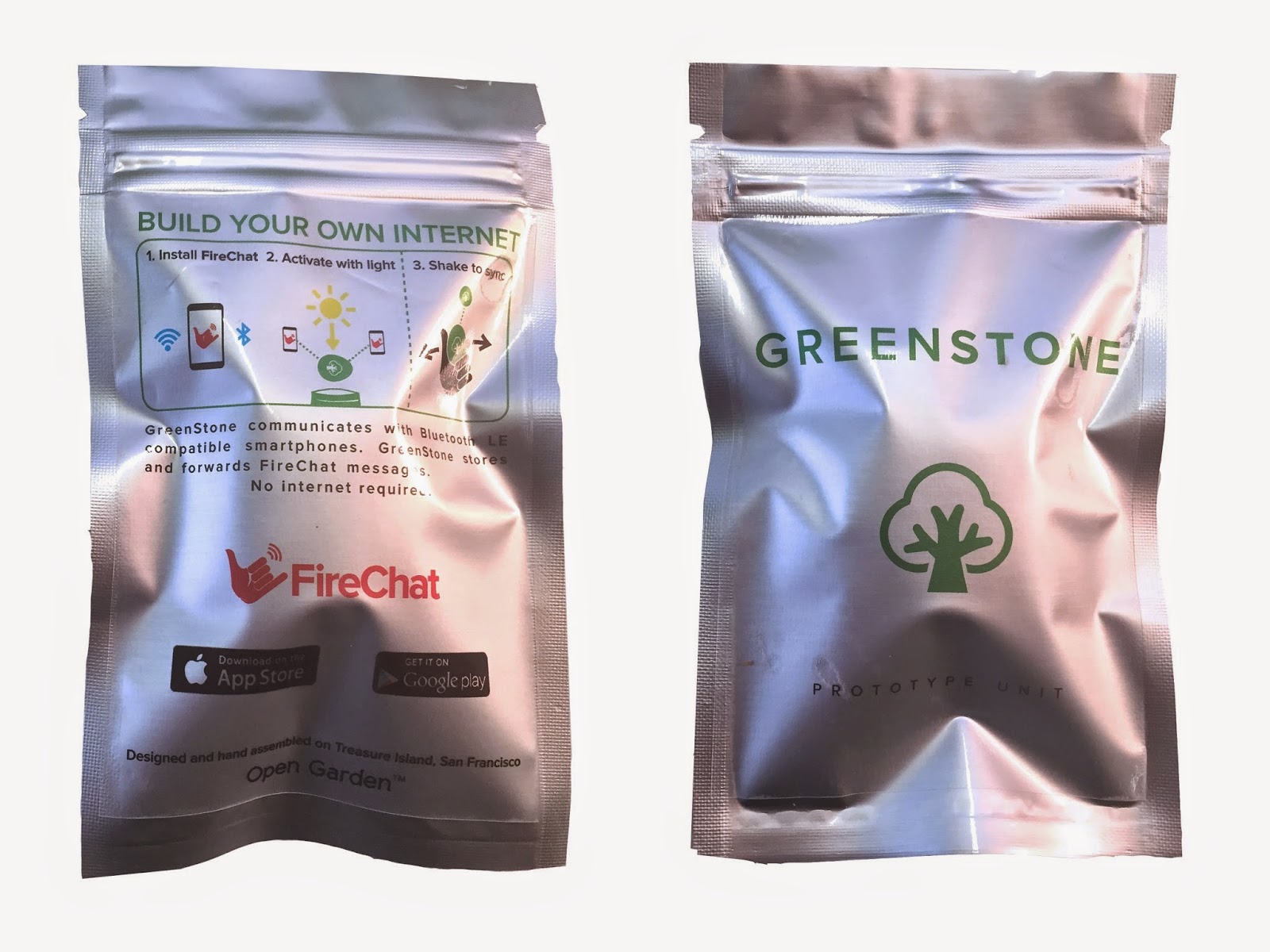
Being extremely passionate about Mesh networking, I was lucky enough to be given the chance to work on a historic project. This project brought me to San Francisco, and gave me the opportunity to work with the most talented Electrical, Mechanical, and Software Engineers. My role was to design the industrial and graphic design of the device, and  oversee the manufacturing and assembly of the plastic case.
The 1000 prototype units use Bluetooth to store an forward messages, creating a messaging infrastructure without internet. I made sure these are fully waterproof to military standards. This is only the beginning of a future of mesh!
DESIGN EVOLUTION:
Packaging:

Finally got my hands on my very own 3D printer! And the image I'm most proud of:
Can't wait to see what's next!


Jan 20, 2015

Ara HKL configuration visual prototype.


There are a few months old, but are some of my best renders yet or Project Ara.  These explore the HKL endoskeleton configuration. The module shown is a contactless blood sugar meter.


Dec 10, 2014

Project Ara Virtual Reality Goggles

A concept for VR goggles powered by Ara (Google's modular smartphone). It would accept inputs from multiple cameras across many spectrum. Night vision and infra-red would be overlaid onto one's vision. It can also process images, with the aid of a high-speed data connection, cloud based, deep learning systems (AI) can be utilized. A wide array of applications can then be created.

FLIR logo used without permission, for presentational purposes only.

Sep 26, 2014

Thermal Camouflage in Fashion and War

I am fascinated by the cycle of war and technology. Almost every major technological advancement of this century came from defense research. Nuclear power, electronic computers, radar and microwaves... The list goes on and on. Many of these eventually make it onto the consumer markets, the intersection of many of these advancements allow a smartphone to exist today.

By looking into current defense technologies (and areas of interest), we can predict what will end up on the consumer markets in years to come. 
Me C.2011
One technology we will see hit the mainstream markets in 2015 is thermal imaging (the ability to see heat).  FLIR (who makes insane thermal cameras for the US military) already has a fairly expensive case-camera for the iphone. The Seek thermal camera has released another iPhone camera. Project Ara (Google's modular smartphone) plans to include a small thermal camera module in their smartphone. A man from FLIR showed me a prototype unit for Ara smaller than 1cm³.

Thermals cameras are here, but what is not in the consumer market are ways to become almost invisible from them.  Invisibility has fascinated mankind for centuries, and humanity is just beginning to make it work. The only glimpse of defense research is this 2011 image by BAE: 
But what if the same could be done with something as small and comfortable as a jacket? This is a prototype fabric material inspired by wearable circuit technology I saw at a Wearables Meetup here in San Francisco:
Instead of an LED panel, there wold be tiny Peltier thermoelectric modules at the center of each hexagon. The technology I saw used conductive thread sewn into the fabric. This would be CNC sewed on a layer beneath the waterproof layer above. The small coolers would look something like this:
These coolers would be attached to a hexagonal, flexible, heat conductive material that would be sewn into place beneath waterproof fabric. Hundreds of these would be sewn into place and controlled by onboard batteries, cameras, and a micro computer. A person would wear this comfortably as a jacket. When not acting as camouflage it could keep the wearer in perfect comfort, even charging the battery from body heat (Utilizing the Seebeck effect).  Electronic garments will hit mainstream fashion, though it will take perhaps another 8 years. This is all feasible today, although very expensive.

When observed from afar, the jacket would read the surrounding heat image with tiny thermal cameras, then render that onto the jacket as a pattern of hot and cool tiles. The wearer's heat signature would be masked by the jacket, rendering them invisible from a thermal camera. Maintaining comfort wold be difficult in this arrangement as the tiles dump heat from the surface of the jacket into the wearer's body. I have yet to imagine a heat dump system.

It is only a matter of time before advanced technology meets mainstream fashion (it has already started). It will likely all happen here in San Francisco.

Aug 30, 2014

An Android L touchpad


A touchpad concept for interaction with the Android operating system. The future of the mobile OS will be a system that can display on your smartphone, TV, laptop, or projector- all through one, main input. This input device could also act as a secondary battery charger. While I prefer a mouse or \Wacom, this design would complement a chromebook quite nicely and is great for web browsing. Created in Photoshop

Aug 10, 2014

A Protective Bumper Case For Project Ara


I generally frown upon putting a case around a phone. A smartphone should inherently be designed  to be indestructible. In 2011, Casio released a line of military-spec phones that I x-rayed in an earlier post. It was truly liberating knowing my old device could photograph under water, bounce off cement, even be thrown into fires, and never break. This device, built almost 5 years ago is still booting up smoothly: It's speakers are also louder than most...
 But today, as devices become outdated more quickly, most manufacturers invest in computing, cameras,  and screens. Companies neglect basic durability and waterproofing. An iPhone is a good example: poor development iPhone 5c didn't last me three weeks!
When Project Ara releases this fall, keeping the device safe will be important. This concept I created utilizes a plastic shock absorbent bumper. This is wrapped around the phone to keep modules in place,  and dirt and dust out. It features a unique design to allow access to Ara's buttons hidden beneath the case. Prototype image:

As we learn more about inputs, such as charging and headphone jacks, the form of the case will accommodate. Fully waterproofing the device could be achieved through custom, 3D printed cases. If ARA is truly going to connect the next 3 billion, It will have to survive in all climate conditions. I want a device that I can take swimming, hiking, travel the world with. Maybe even hand down to my future children.  The way current products are built, that will rarely ever happen. I'm here to change that.

**Further Sketching:
 

Jul 19, 2014

Another ambient lighting solution.

Another experiment into the diffusion of LED light. Ultimately we want to imitate the light of the sun or a lantern, because that tends to mentally associate as relaxing. This LED lamp went bad, a few LEDs shorting and strobing. After disabling the bad LEDs I built a simple diffuser out of a milk bottle and the optics are now better than new. The diffuser makes drawing and reading a lot more comfortable than direct light.

Jul 13, 2014

Canon Ara Portable Imaging System Camera Module

A visual and 3D study into the industrial and advertising design of the Canon brand. I'm a huge fan of canon and hope they build an Ara camera module. Logo and image used without permission, for presentation purposes only. I want one! Note: I also tried to incorporate the fallacies of Canon ad techniques, like not showing the whole product.